Citrix Desktop Viewer Screen Resolution and Window Size
- Citrix/Terminal Services/Remote Desktop Services
- Published May 4, 2015
As far as I know there is no “official” way to set the width, height and screen position of Citrix Desktop Viewer in window mode. It can be done easily by changing a few registry values, though.
To set the window size (including title bar, borders, etc.) modify the following registry values:
[HKEY_CURRENT_USER\Software\Citrix\XenDesktop\DesktopViewer\SUBKEY]
"WindowedBoundsLocationX"=dword:00000000
"WindowedBoundsLocationY"=dword:00000000
"WindowedBoundsSizeWidth"=dword:00000500
"WindowedBoundsSizeHeight"=dword:000002d0
Above values will put the Desktop Viewer window in the top left corner and set an outer size of 1280x720.
Notes: You need to replace SUBKEY with the internal name of the published resource. The easiest way to do that is check the registry of a user who has already connected to that resource. And yes, this works for XenApp and XenDesktop.
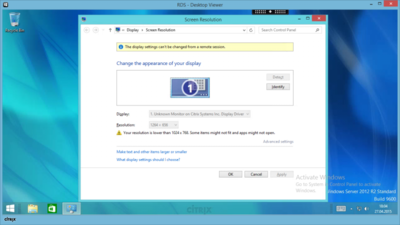
To find the screen resolution of the XenApp/XenDesktop session right-click the desktop and select Screen resolution. The dialog that comes up shows you the net size that remains after the Desktop Viewer window borders have been subtracted (1264x656 in this case):




Comments