User Profile Manager

Tag 14 posts
User ProfilesTips and Tools

Differences Between Citrix Profile Management and Immidio Flex Profiles

From time to time I get asked about the differences between Citrix’s and Immidio’s profile management products. Here are some common questions along with my answers. Can the product be used to provide a single profile on multiple platforms? Citrix Profile Management 3.x does not have cross-platform capabilities built in. That means you cannot use an XP profile on Windows 7, but you can use the same profile on 32 and 64 bit Windows, if you dare. Citrix has a beta version of PM with cross-platform support for MS Office and Internet Explorer. Flex Profiles does not have true cross-platform capabilities either, but it can be used to make settings available cross-platform that have the same format on all platforms. Example: HKCU\Software\Paint.NET is probably a no-brainer whereas copying HKCU\Software\Microsoft\Internet Explorer around is probably a bad idea. Can the product be used on SBC, VDI and fat clients? This is true for both Citrix PM and Flex Profiles (licensing restrictions may apply). Can the product be used to preconfigure a user’s environment? Both Citrix Profile Management and Immidio Flex Profiles are classic profile management products without the capability to set up a specific user environment or distribute updated settings to all users. That is typically referred to as “user environment management” and two free implementations are Microsoft’s Group Policy Preferences and Pierre Marmignon’s Virtual User Environment Manager. Of course there are many alternatives by companies like AppSense or RES. Can portions of the profile be saved during a session as well as at logoff and at disconnects? Citrix Profile Management loads (respectively streams) the profile at logon and writes changes back at logoff. It also has a feature called “active write back” which, if enabled, causes changed files to be written back to the user store immediately. This works for files only, not for registry keys. Flex Profiles typically is configured to import settings at logon and export again at logoff. Since Flex uses a simple tool for the imports/exports it is conceivable to call that tool during a session as well. There is, however, no built-in support for that. Neither is there for exporting settings at disconnects. Can it be configured what to save and what not? Both products are very flexible when it comes to which parts of the profile should be saved. Yet there is one major difference: by default, Profile Management saves everything whereas Flex Profiles saves nothing. As a consequence, PM just works out of the box whereas Flex needs to be configured for each application individually.
User Profiles

Citrix User Profile Manager 5 Years Ago: Birth

Citrix User Profile Manager 5 Years Ago: Birth
Citrix User Profile Manager is pretty well-known in the SBC space today. Five years ago, things were quite different. Citrix did not have a user profile solution, and neither did sepago. But we had an idea spinning in our heads we soon came to call Smooth Profiles. Slowly that idea became code, then was renamed to sepagoPROFILE, was acquired by Citrix and renamed again to User Profile Manager and then again to Profile management (with capital P and lower-case m!). You may have heard the latter part of the story. Here is a little something from the very beginning.
User Profiles

Fixing Office 2007's Quick Access Toolbars With Citrix User Profile Manager

Fixing Office 2007's Quick Access Toolbars With Citrix User Profile Manager
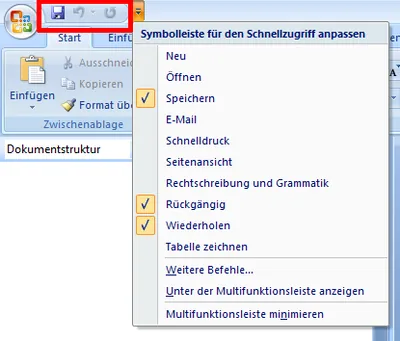
Not sure where user profile management might be useful? Here is an example that should apply to almost everyone. The obvious new user interface feature of Microsoft Office 2007 is the ribbon. But there are numerous other UI enhancements over Office 2003. One of these are the Quick Access Toolbars. If you are not sure what I am talking about: the following screen shot should give you an idea (from a German version of Office, sorry):
User Profiles

Citrix User Profile Manager (UPM) and the Broken Rootdrive

Citrix User Profile Manager (UPM) and the Broken Rootdrive
Terminal server application compatibility scripts have been around for a long time - so long in fact, that I considered them a legacy and stowed away any knowledge of them in a very remote area of my brain. When a Citrix customer brought up a problem with the mapping of ROOTDRIVE in the User Profile Manager forum, at first I had no clue what he was talking about. Luckily, the customer was able to pin the problem down to a specific command that failed when, and only when, User Profile Manager was processing the logon. This is the story of UsrLogon.cmd, ACRegL.exe and UPM.
User Profiles

Folder De-Localization with Citrix User Profile Manager (UPM)

Windows user profiles prior to Vista / Server 2008 contain localized folder names. End users expect that, of course, but admins tend to hate it because automated management becomes much more difficult. How can this dilemma be resolved? End users only see the local copy of the profile, while admins mostly have to deal with the central copy on a file server. Wouldn’t it be cool to have a “translator” component that makes sure local folders are localized while central folders are in one language only?
User Profiles

Citrix User Profile Manager: How Registry Exclusion Lists Can Mess Up Group Policy Processing

The documentation of Citrix User Profile Manager (UPM, for short) recommends excluding the following registry keys from processing: HKEY_CURRENT_USER\Software\Policies HKEY_CURRENT_USER\Software\Microsoft\Windows\CurrentVersion\Policies The net effect of this is that the Citrix profiles managed by UPM do not contain any policy settings. The reasoning behind this being: Policies are reapplied anyway during the next logon, so there is no reason to waste CPU cycles on synchronizing such “redundant” information.
User Profiles

Mandatory Profiles - The Good, the Bad and the Ugly

This article is part of Helge’s Profile Toolkit, a set of posts explaining the knowledge and tools required to tame Windows user profiles. A mandatory profile is a special type of roaming profile. As with a roaming profile, a mandatory profile is copied from its network location to the local machine during logon. But during logoff, changes are not copied back. Instead, the local copy of the mandatory profile is reset to its initial state at the next logon. In essence, mandatory profiles are read-only roaming profiles. This has advantages, but also severe drawbacks.
User Profiles