Switching from Chrome to Firefox

Switching from Chrome to Firefox
After many years as a happy user, I switched from Chrome to Firefox. How did that go? Astonishingly well! Here are some notes I took in the process. My History of Changing Browsers Netscape to Internet Explorer I think I started out with Netscape Navigator on Windows 95. My first change of browsers happened with Windows NT 4 and Internet Explorer 4. That was a great browser! Everybody switched to IE in the following years. Microsoft’s domination of the browser market (yes, that was a reality for many years) started right there with IE4. Internet Explorer was successful not only because it was bundled with the operating system, but also because it was a good application.
Applications

PowerShell Script: Test Chrome, Firefox & IE Browser Performance

PowerShell Script: Test Chrome, Firefox & IE Browser Performance
There is more than one way to test the performance of web browsers like Chrome, Firefox, or IE, but regardless of how you do it, you need a consistent workload that makes the browsers comparable. Unless you are testing with synthetic benchmarks (which come with a plethora of problems of their own) you need a way to automate browsers opening tabs and loading URLs. This article presents a simple solution to do just that.
Scripting

Browser Ad Blockers and Privacy

Browser Ad Blockers and Privacy
You have probably been in this situation: on some shopping site you put an article in your cart, but decide not to buy it after all. Later on, you notice that you are getting targeted ads for the exact same product on totally unrelated sites - or so you think. There is, however, a common denominator: the ad network. It tracks you quite effectively as you move from site to site. Many people are not exactly happy about that and turn to ad blockers to guard their privacy. This article looks at one way to measure the ad blockers’ effectiveness in terms of keeping their users’ privacy.
Security

Impact of GPU Acceleration on Browser CPU Usage

Impact of GPU Acceleration on Browser CPU Usage
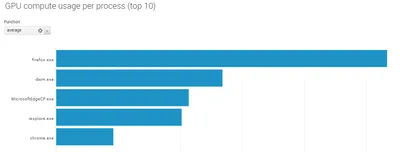
GPU acceleration is en vogue. After slowly but steadily moving out of the 3D niche it has arrived in the mainstream. Today, applications like Microsoft Office leverage the GPU, but even more so do web browsers. Chrome, Firefox, and Internet Explorer all have hardware acceleration turned on by default. People generally seem to be happy about that - GPUs are super-efficient, the more work they do the fewer remains for the CPU, overall energy consumption is reduced and battery life increases. Or so the myth goes. Interestingly, facts to prove that are hard to find. Nobody seems to have measured how GPU acceleration affects CPU usage. Let’s change that.
Performance/Sizing

Monitoring Browser Performance per Site with uberAgent for Splunk

Monitoring Browser Performance per Site with uberAgent for Splunk
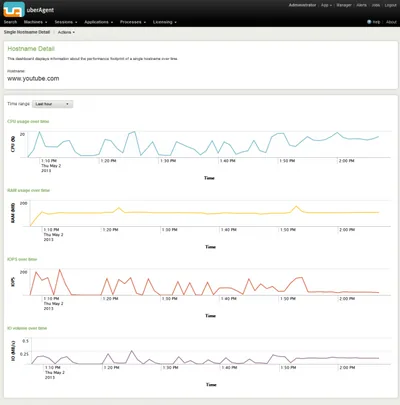
The days are long gone when a browser was just another application. Modern websites are applications of their own, and the browser is their operating system. That has consequences for monitoring. It is no longer sufficient to gather performance data for the browser as a whole. When, for example, Internet Explorer’s CPU usage is high, Administrators need to understand what caused that. Is it the business-critical ERP site or are people just watching fun videos on YouTube?
Logs & Metrics