Impact of GPU Acceleration on Browser CPU Usage
Impact of GPU Acceleration on Browser CPU Usage
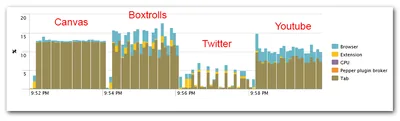
GPU acceleration is en vogue. After slowly but steadily moving out of the 3D niche it has arrived in the mainstream. Today, applications like Microsoft Office leverage the GPU, but even more so do web browsers. Chrome, Firefox, and Internet Explorer all have hardware acceleration turned on by default. People generally seem to be happy about that - GPUs are super-efficient, the more work they do the fewer remains for the CPU, overall energy consumption is reduced and battery life increases. Or so the myth goes. Interestingly, facts to prove that are hard to find. Nobody seems to have measured how GPU acceleration affects CPU usage. Let’s change that.
Performance/Sizing

Measuring the Impact of Folder Redirection - Application Launch & SMB Version

Measuring the Impact of Folder Redirection - Application Launch & SMB Version
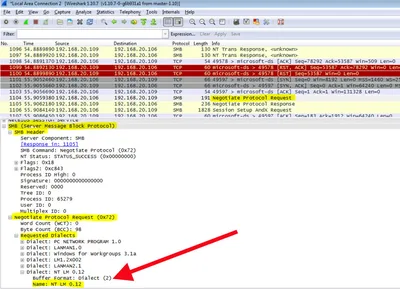
This is the fifth in a series of articles on folder redirection by Aaron Parker, Helge Klein and Shawn Bass. Part one: How Folder Redirection Impacts UX & Breaks Applications Part two: Visualizing the Impact of Folder Redirection – Logon and Application Launch Part three: Visualizing the Impact of Folder Redirection – Start Menu Search Part four: Measuring the Impact of Folder Redirection – User Logon Part five: this article Previously on this Series If you have been following this mini-series you know that after explaining the basics in part one we got to the juicy bits in parts two and three, where we presented videos that vividly show that folder redirection indeed speeds up user logons considerably, but at the price of potentially horrible user experience during the session. In part four Aaron Parker published our measurements of how folder redirection affects logon duration. This fifth part is about the effect folder redirection and SMB version can have on application launch speed.
Windows Internals

Visualizing the Impact of Folder Redirection – Start Menu Search

Visualizing the Impact of Folder Redirection – Start Menu Search
This is the third in a series of articles on folder redirection by Aaron Parker, Helge Klein and Shawn Bass. Part one: How Folder Redirection Impacts UX & Breaks Applications Part two: Visualizing the Impact of Folder Redirection – Logon and Application Launch Part three: this article Part four: Measuring the Impact of Folder Redirection – User Logon Previously on this Series If you have been following this mini-series you know that after explaining the basics in part one we got to the juicy bits in part two, where Aaron Parker presented videos that vividly show that folder redirection indeed speeds up user logons considerably, but at the price of potentially horrible user experience during the session. In this third part we are going to explore that in more detail.
Windows Internals

How Folder Redirection Impacts UX & Breaks Applications

How Folder Redirection Impacts UX & Breaks Applications
This is the first in a series of articles on folder redirection by Aaron Parker, Helge Klein and Shawn Bass. Part one: this article Part two: Visualizing the Impact of Folder Redirection – Logon and Application Launch Part three: Visualizing the Impact of Folder Redirection – Start Menu Search Part four: Measuring the Impact of Folder Redirection – User Logon Why Even Talk About Folder Redirection - in 2014!?! Working in the SBC/VDI space without stumbling across folder redirection is about as easy as travelling from Europe to the US as an IP packet without going through a Cisco router.
Windows Internals

Compacting Client Hyper-V VHDX Files

Compacting Client Hyper-V VHDX Files
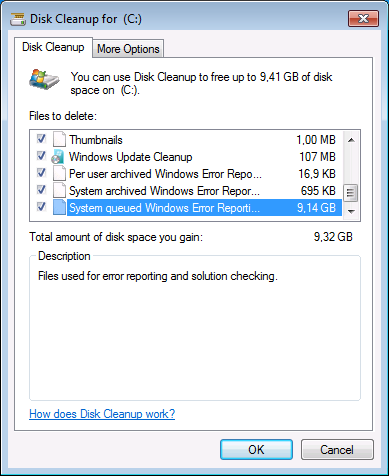
Virtual hard disks have the same tendency to grow in size as regular disks have to fill up. Deduplication is a great way to battle this, but unfortunately it is not available for Windows 8 Client Hyper-V. I know that hacks are available describing how to transfer the relevant DLLs from Server 2012 but I value my data too much to try that. The only thing left in order to regain valuable (SSD) disk space is to compact the VHDX. That, however, is more difficult than it should be.
Virtualization & Containers

VCNRW - Your Friendly Local Virtualization Community

VCNRW - Your Friendly Local Virtualization Community
In the past years I have attended many different conferences and user group meetings. Apart from the fact that every single one of them was great and definitely worth the while they all had another thing in common: getting there involved a significant amount of travel, in most cases to other countries or even continents. Whenever I read someone’s account of a local community meeting I was a tiny little bit envious that they had such things near their homes and I did not. High time to do something about it!
Miscellaneous

Real-World Example: WiX/MSI Application Installer

Real-World Example: WiX/MSI Application Installer
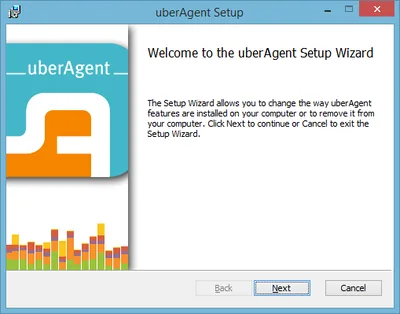
Creating an installer that does not suck is hard. The tools available are expensive, inadequate, overly complicated and/or poorly documented (pick any combination). WiX is one of the better choices. It is free and it is used for some Microsoft products. But WiX is just a wrapper around MSI and as such is unnecessarily difficult to use. In an effort to make life better for fellow developers I am publishing the full source code of uberAgent’s installer here.
Software development

Is my App Running on Citrix XenDesktop/XenApp?

Is my App Running on Citrix XenDesktop/XenApp?
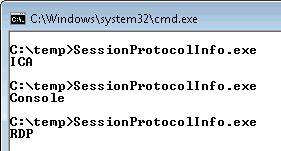
How do you programmatically determine if an application is running in a session accessed over a remoting protocol (i.e. ICA aka HDX or RDP)? It may be Citrix’ strategy to completely hide the fact that a session is remoted - which makes sense in many ways - but in some cases developers simply need to know in order to optimize their applications. It is surprisingly difficult to find official documentation about this. Here is what you need to know.
Citrix/Terminal Services/Remote Desktop Services