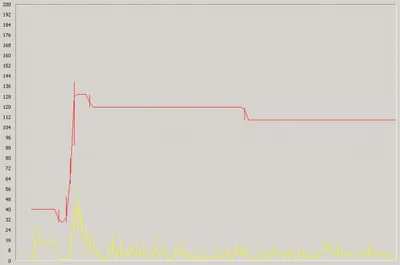
Why Sizing for Averages is a Bad Idea

Why Sizing for Averages is a Bad Idea
When sizing a new environment it is tempting to use averages. It seems the logical thing to do. But it also guarantees a bad user experience. Example: Sizing an RDS or XenApp Farm Let’s say you’re tasked with building a new Citrix XenApp farm. Being a diligent IT person you set up a pilot: one or two machines with all the right software and settings. Then you carefully select a group of pilot users in such a way that they represent the organization’s employee types statistically correctly. Then you let them work on the new platform, ironing out bugs and such. At the end of that period, you have a great new platform. But there is one big question left: how many servers to buy?!
Logs & Metrics

Impact of GPU Acceleration on Browser CPU Usage

Impact of GPU Acceleration on Browser CPU Usage
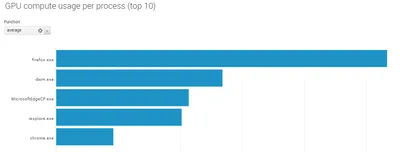
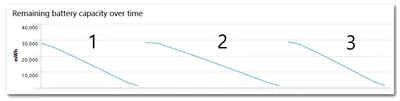
GPU acceleration is en vogue. After slowly but steadily moving out of the 3D niche it has arrived in the mainstream. Today, applications like Microsoft Office leverage the GPU, but even more so do web browsers. Chrome, Firefox, and Internet Explorer all have hardware acceleration turned on by default. People generally seem to be happy about that - GPUs are super-efficient, the more work they do the fewer remains for the CPU, overall energy consumption is reduced and battery life increases. Or so the myth goes. Interestingly, facts to prove that are hard to find. Nobody seems to have measured how GPU acceleration affects CPU usage. Let’s change that.
Performance/Sizing
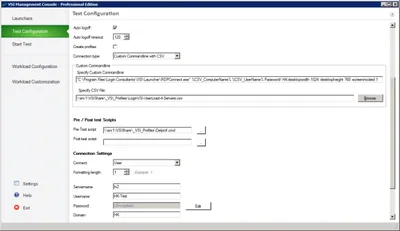
How-to: XenApp/RDS Sizing and Capacity Planning with uberAgent for Splunk

How-to: XenApp/RDS Sizing and Capacity Planning with uberAgent for Splunk
Do you know the maximum number of users each of your terminal servers can host with acceptable performance? You may have found out the hard way how many are too many - but how many are just right? Farm sizing and server capacity planning are typical tasks for consultants who often have a hard time fighting the peculiarities of perfmon and logman trying to get the data they need for their calculations. It can be so much easier at no additional cost. The 60-day Enterprise Trial version of Splunk in conjunction with an evaluation license of uberAgent give all the information you need in much less time. Here is how.
Citrix/Terminal Services/Remote Desktop Services

Monitoring Browser Performance per Site with uberAgent for Splunk

Monitoring Browser Performance per Site with uberAgent for Splunk
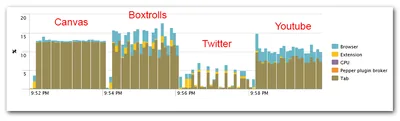
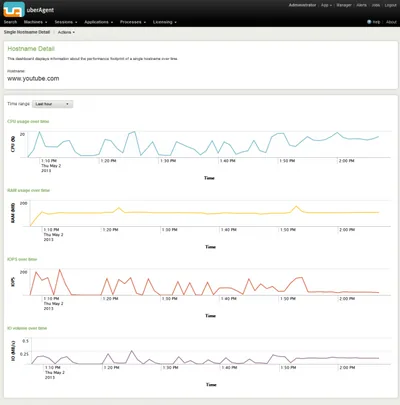
The days are long gone when a browser was just another application. Modern websites are applications of their own, and the browser is their operating system. That has consequences for monitoring. It is no longer sufficient to gather performance data for the browser as a whole. When, for example, Internet Explorer’s CPU usage is high, Administrators need to understand what caused that. Is it the business-critical ERP site or are people just watching fun videos on YouTube?
Logs & Metrics

The Impossibility of Measuring IOPS (Correctly)

The Impossibility of Measuring IOPS (Correctly)
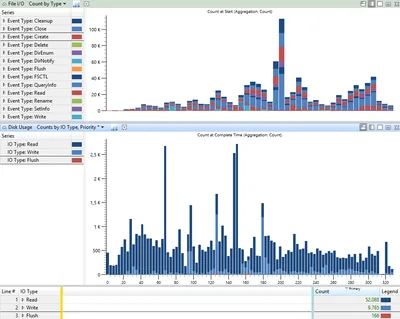
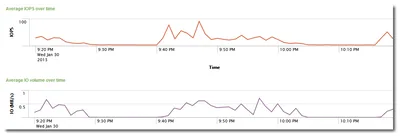
If you have ever used Sysinternals’ Process Monitor, chances are high you were a little intimidated when you looked at your first capture: it probably contained hundreds of thousands of registry and file system events, generated in a minute or less. That amount of activity must surely indicate high system load - but strangely, very often it does not. Looking at the hard disk LED you will only see an occasional flickering, even though thousands of file system events are captured per second. How is that possible? Read on to find out.
Performance/Sizing

Performance Impact of Windows Offline Files

A little known fact about the Windows Offline Files functionality is it slows down network operations considerably. Here is how and why. Test Results The following tests were performed with a set of 1,114 files of a total size of 408 MB. In the copy test the files were copied from a Windows 7 client machine to a file server over a 100 MBit LAN connection. In the delete test the files were deleted on the file server. No antivirus or other security products were running on either side. Each test was run twice, the table lists the average.
Networking

XenApp and RDS Sizing Part 4 – Calculating the New Farm's Capacity

This article is part of a mini-series. You can find the other articles here. In the previous articles in this series we saw how to calculate a farm’s capacity and then how to determine its load. With that information and knowledge of our methodology we can go about calculating the capacity of the new farm, in other words doing the actual sizing. Which is dead simple, by the way.
Citrix/Terminal Services/Remote Desktop Services