Splunking the Aspect Ratio Distribution of National Flags

Splunking the Aspect Ratio Distribution of National Flags
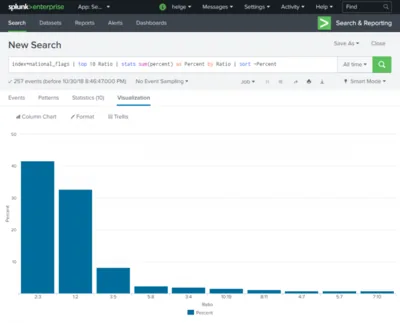
When I tried to align the Union Jack and the flag of Germany on a presentation slide I noticed that I couldn’t - their aspect ratios are different. A quick search led me to this list of aspect ratios of national flags on Wikipedia. Apparently, national flags are far from standardized. A broad range of aspect ratios is being used. I decided to start a little fun project finding out which aspect ratios are most common.
Logs & Metrics

Why Sizing for Averages is a Bad Idea

Why Sizing for Averages is a Bad Idea
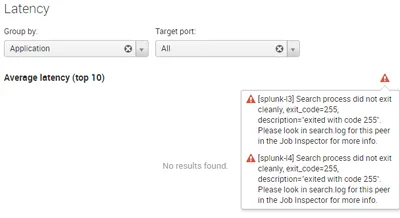
When sizing a new environment it is tempting to use averages. It seems the logical thing to do. But it also guarantees a bad user experience. Example: Sizing an RDS or XenApp Farm Let’s say you’re tasked with building a new Citrix XenApp farm. Being a diligent IT person you set up a pilot: one or two machines with all the right software and settings. Then you carefully select a group of pilot users in such a way that they represent the organization’s employee types statistically correctly. Then you let them work on the new platform, ironing out bugs and such. At the end of that period, you have a great new platform. But there is one big question left: how many servers to buy?!
Logs & Metrics

Some of the Best Splunk Marketing Slogans Extracted from Splunk.exe

If you have ever been to a conference with a Splunk booth you will have noticed their t-shirts. They are all black with a cool slogan printed in white. When you have been working with Splunk for some time you will notice that it has a very powerful commandline tool, splunk.exe. You can use that to tell Splunk’s deployment server component that one or more apps have changed, for example, with this command: splunk.exe reload deploy-server.
Logs & Metrics

Boot IO Analysis with uberAgent for Splunk 1.5

Boot IO Analysis with uberAgent for Splunk 1.5
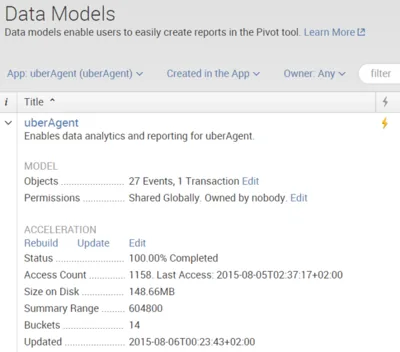
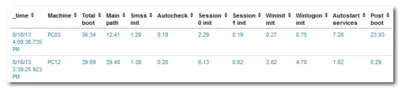
Analyzing slow boots is a difficult task. You need to install software like XPerf and master its far-from-intuitive command-line options to generate a trace file that you can then analyze. Once you find a possible cause for the long startup duration you never know if it is specific to the machine you analyzed or if it affects other PCs, too. In other words: XPerf, although powerful, is difficult to master. And it does not scale. uberAgent does. And it is super-easy to use.
Logs & Metrics

How-to: XenApp/RDS Sizing and Capacity Planning with uberAgent for Splunk

How-to: XenApp/RDS Sizing and Capacity Planning with uberAgent for Splunk
Do you know the maximum number of users each of your terminal servers can host with acceptable performance? You may have found out the hard way how many are too many - but how many are just right? Farm sizing and server capacity planning are typical tasks for consultants who often have a hard time fighting the peculiarities of perfmon and logman trying to get the data they need for their calculations. It can be so much easier at no additional cost. The 60-day Enterprise Trial version of Splunk in conjunction with an evaluation license of uberAgent give all the information you need in much less time. Here is how.
Citrix/Terminal Services/Remote Desktop Services

Monitoring Browser Performance per Site with uberAgent for Splunk

Monitoring Browser Performance per Site with uberAgent for Splunk
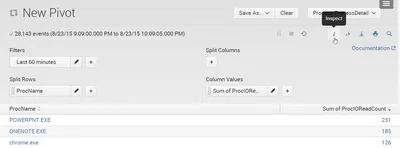
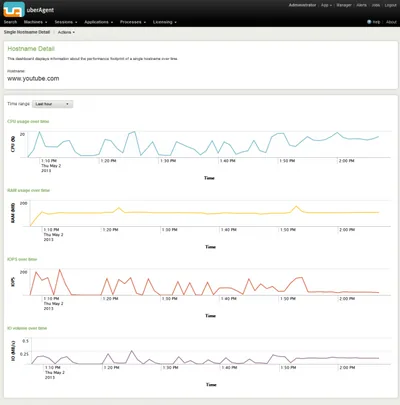
The days are long gone when a browser was just another application. Modern websites are applications of their own, and the browser is their operating system. That has consequences for monitoring. It is no longer sufficient to gather performance data for the browser as a whole. When, for example, Internet Explorer’s CPU usage is high, Administrators need to understand what caused that. Is it the business-critical ERP site or are people just watching fun videos on YouTube?
Logs & Metrics